Types of charging modes: What is Mode 3 and why is it the most widely used?
Electric mobility is advancing by leaps and bounds, and with it, the need to understand the different options for charging an electric vehicle. The IEC 61851 standard defines four main charging modes, each with specific characteristics in terms of safety, speed and efficiency.
- Mode 1: Consists of charging using a conventional domestic plug with no communication between the vehicle and the electricity grid. This is the least secure and slowest option, so it is not recommended for charging electric cars.
- Mode 2: Similar to Mode 1, but incorporates a control system in the charging cable to prevent overloads and electrical faults. Even so, it is still not the most efficient or secure option for regular use.
- Mode 3: The most recommended and widely used option in Europe. It is carried out through a dedicated charging point, which allows communication between the vehicle and the grid, ensuring a safe, efficient and controlled process.
- Mode 4: Exclusive for fast charging with direct current (DC). This is the mode used in high-power public charging stations, such as those on motorways and at electric charging points.
Why is Mode 3 the most widely used?
Mode 3 has been adopted as the standard in Europe due to its combination of safety, efficiency and compatibility with most current electric vehicles. Some of its main advantages are:
Greater safety
Unlike Modes 1 and 2, Mode 3 has a communication system that detects the vehicle’s charge status and adjusts the power supplied accordingly. This reduces the risk of overloads, short circuits and overheating.
Optimised charging speed
Mode 3 chargers allow for higher power charging, from 3.7 kW to 22 kW in alternating current (AC), depending on the installation and the vehicle’s capacity. This means considerably shorter charging times compared to previous modes.
Smart communication between the vehicle and the infrastructure
Mode 3 enables dynamic charge management, adjusting the power according to grid availability and vehicle needs. This not only improves the efficiency of the process, but also facilitates integration with renewable energy systems and optimises electricity consumption in homes and businesses.
Integration with smart charging solutions
Thanks to its communication capabilities, Mode 3 enables the implementation of advanced technologies such as charging management via mobile applications, automatic power adjustment based on electricity rates, and scheduled charging to take advantage of off-peak hours with lower energy costs.
At IRIA, we design our chargers with maximum efficiency and safety for our customers in mind. Our equipment is based on Mode 3, which guarantees:
Safe and controlled charging at all times.
Compatibility with all electric vehicles on the market.
Optimisation of electricity consumption with smart features.
Innovative and functional design, adapted to any environment.
If you are looking for a reliable, efficient charger that is adapted to the demands of the future of electric mobility, discover our range of IRIA chargers and take the next step towards smart and sustainable charging.
See more news
October Electricity Appointments: the month’s key events for the energy sector.
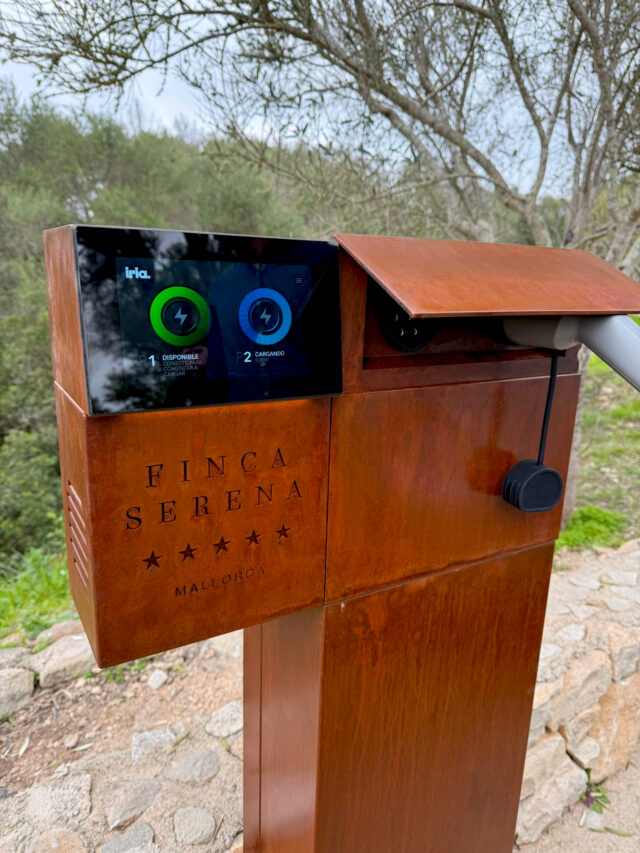
IRIA is present in two Único Hotels properties that have been awarded MICHELIN Keys
September Electricity Appointments: five meetings to promote mobility and innovation in the energy sector.
August Electricity Appointments: five events to keep track of developments in the energy sector.